OTC
Tenor's OTC section enables borrowers and lenders to structure bespoke agreements outside standardized markets. The feature combines the flexibility of over-the-counter (OTC) negotiation with the benefits of onchain settlement. This is particularly valuable for longer tail collateral assets and custom terms.
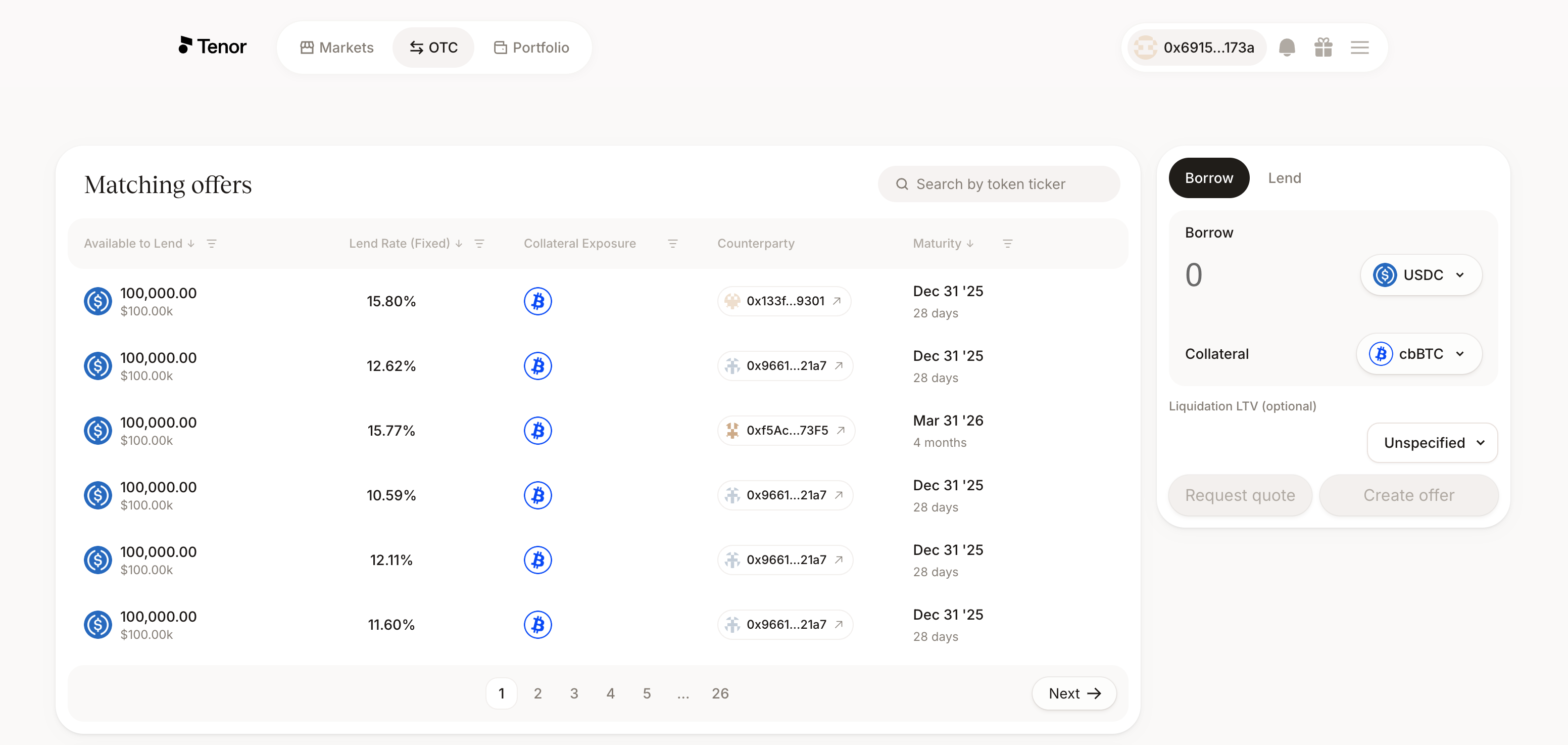
Browse Offers
Users can browse through existing offers in the OTC section and filter offers based on their preferences (collateral, borrow currency, rate, term).
Create an offer
Users can also create offers with specific parameters by specifying:
- Lend/borrow currency and amount
- Collateral asset(s) and amount (if borrow offer)
- LLTV
- Oracle
- Term
- Rate
- Counterparties (optional)
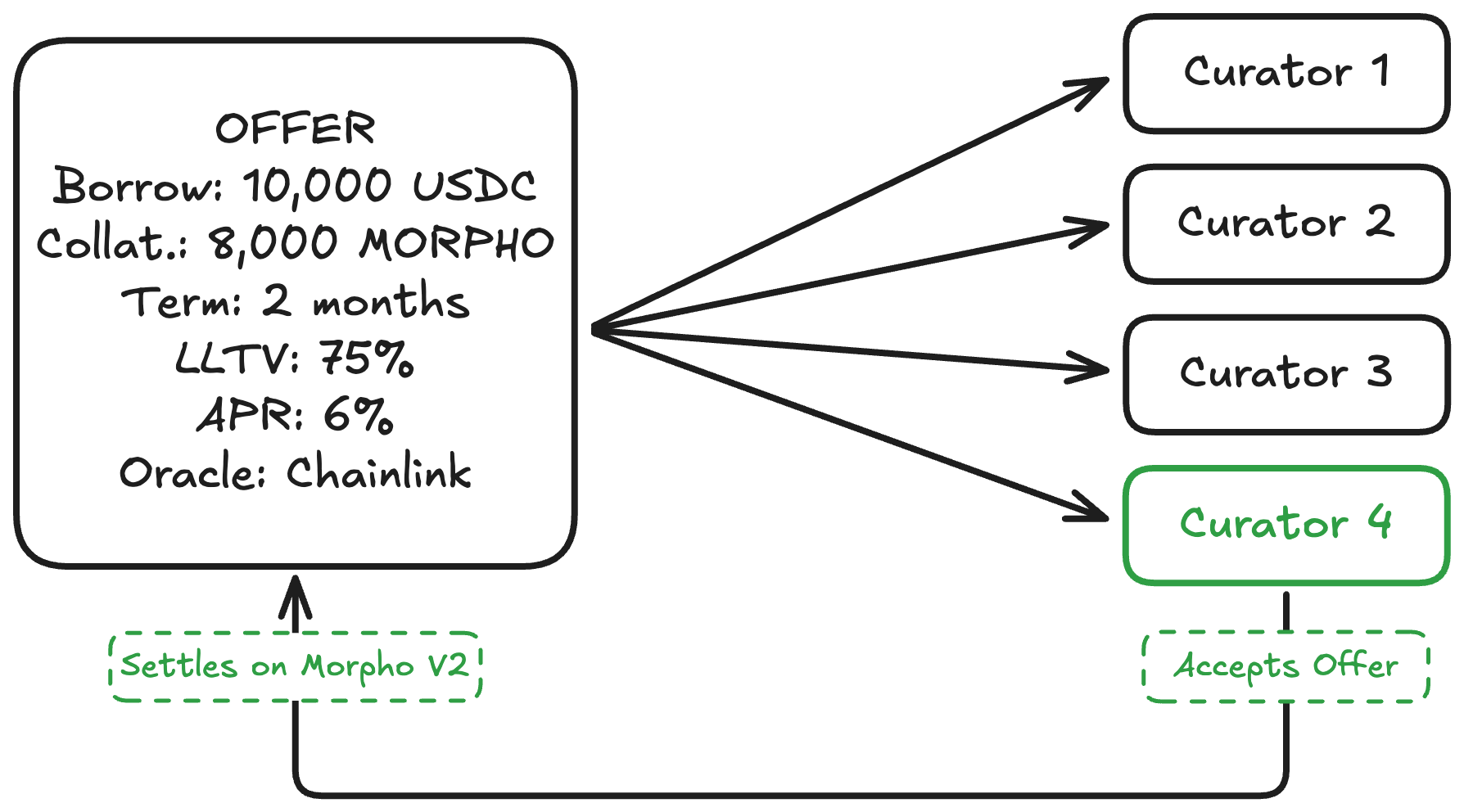
For example, a borrower can send an offer to a specific curator or a group of curators. In the illustration below, the borrower creates an offer, broadcasts it to the market, and it is ultimately accepted by Curator 4.
OTC Inbox
When a counterparty receives an offer or a request, they are notified through their inbox. They can then accept, decline, or propose a different offer to the sender. If the offer is accepted, the transaction is settled onchain through the Morpho protocol.
Prime users can also send renewal offers to existing borrowers approaching maturity. This allows lenders to proactively offer new terms to borrowers they've previously worked with, facilitating position rollovers. Borrowers can also send renewal offers to potential lenders or request a quote from them.
Request a Quote
For more flexibility, a user can request a quote from a counterparty by only providing the:
- Borrow currency and amount
- Collateral asset
The counterparty can then create an onchain offer and fill in the gaps to propose an LLTV, oracle, term and rate.
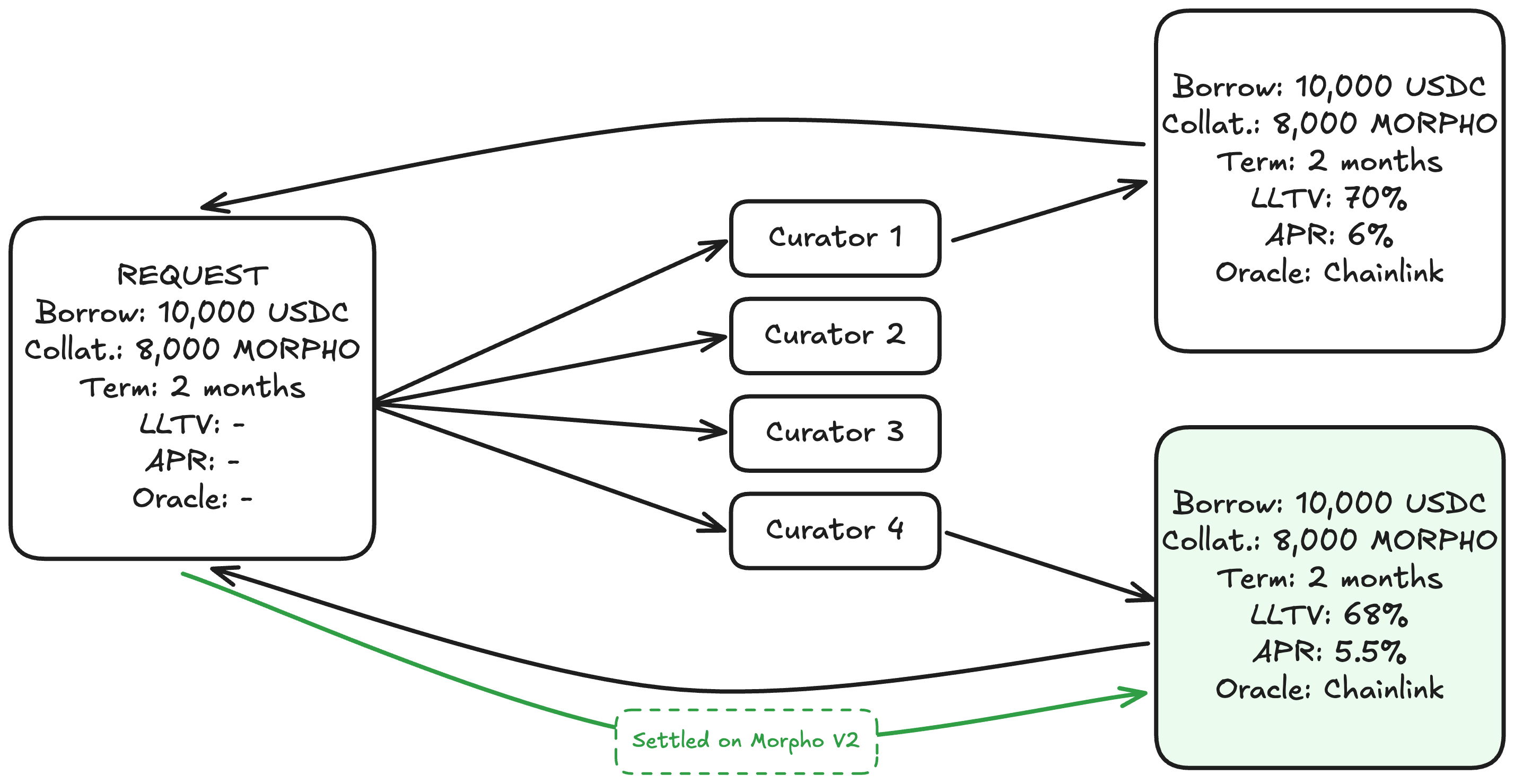
In the example below, the borrower requests a quote from 4 curators. Only two curators return an offer and the borrower accepts the offer from Curator 4. The agreement is then settled onchain.
Delayed Liquidations
OTC offers support delayed liquidations, allowing borrowers to define a grace period that begins when the maximum LTV is breached. During this period, they can either repay their position or add additional collateral to prevent liquidation.
Borrowers have flexibility in setting the duration of the grace period. However, lenders may require a lower liquidation LTV to offset the increased price risk associated with the grace period.